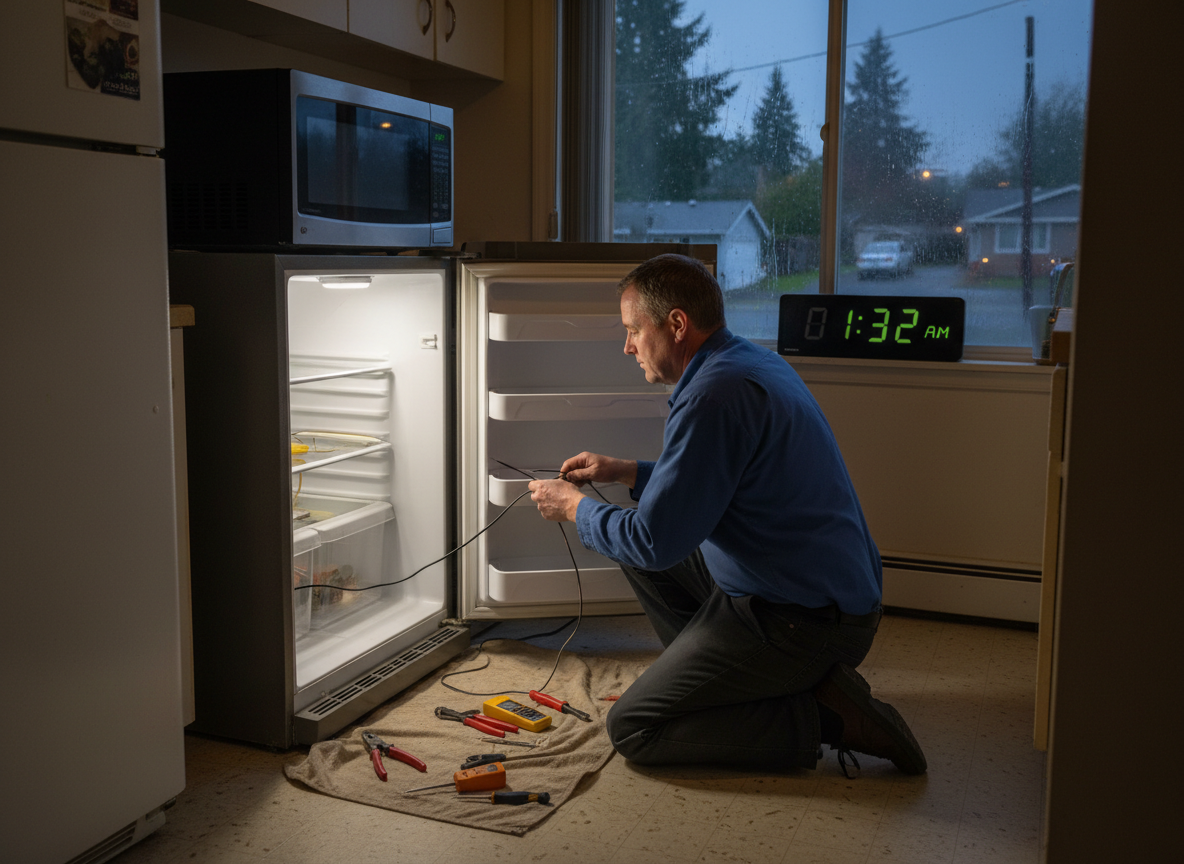
Gresham homes built before the 1990s in Rockwood and near Mt. Hood Community College often have single-wall appliance connections and older wiring that fails during the wet winters when occasional flooding reaches crawl spaces. Technicians on 24/7 calls routinely find corroded terminals on refrigerators and washers after water sits for even one night, and the mild summers do not dry these areas fast enough to prevent mold on insulation. Working from the shop at 18238 SE Division St allows quick dispatch to Downtown addresses where narrow lots limit access for larger diagnostic equipment.
Flooding along the low spots near Gresham Pioneer Cemetery pushes water into basements faster than in higher Portland neighborhoods, so dryer vents and dishwasher drains clog with silt that standard filters miss. A 24/7 response must include checking both the appliance and the home's drain slope before any part replacement, because replacing a pump without fixing the grade only creates repeat calls the next storm. Local soil composition holds moisture longer than sandy ground farther east, forcing extra time on each job to verify no hidden shorts remain after the unit is powered back on.
Multnomah County permitting rules for gas appliances require shutoff verification at the meter before any service begins, a step that becomes critical during overnight calls when homeowners may not know the exact location of their shutoff in older Downtown stock. Technicians carry extra gaskets rated for constant damp conditions because standard ones swell and leak after repeated wet-season exposure. These details change the time on site and the parts needed compared with drier climates.
Technician insight
In Gresham, the thing that catches most people out with 24/7 appliance repair is how wet winters push silt into Rockwood basements and older Downtown crawl spaces, shorting controls that homeowners assume are just age-related until the next storm arrives.
Night Call for Flood-Damaged Washer
A Rockwood homeowner reported a washer that stopped mid-cycle during heavy rain. Inspection showed silt had entered the drain pump from a nearby low spot. The pump was cleared and the drain line re-sloped slightly to prevent recurrence, restoring full function before morning.
How it works
- 1
Initial Call Assessment
Gather appliance model, symptoms, and address details while confirming access through flooded or narrow Gresham streets.
- 2
On-Site Diagnosis
Inspect the unit, electrical connections, and nearby drains for silt or corrosion common after wet winters in Rockwood.
- 3
Repair Execution
Replace or restore the failed component using parts suited to constant moisture exposure, then test under load.
- 4
Final Verification
Confirm operation, document any home-grade issues that could cause future failures, and leave written notes for the homeowner.
Pricing
Upfront quotes provided before any work begins.