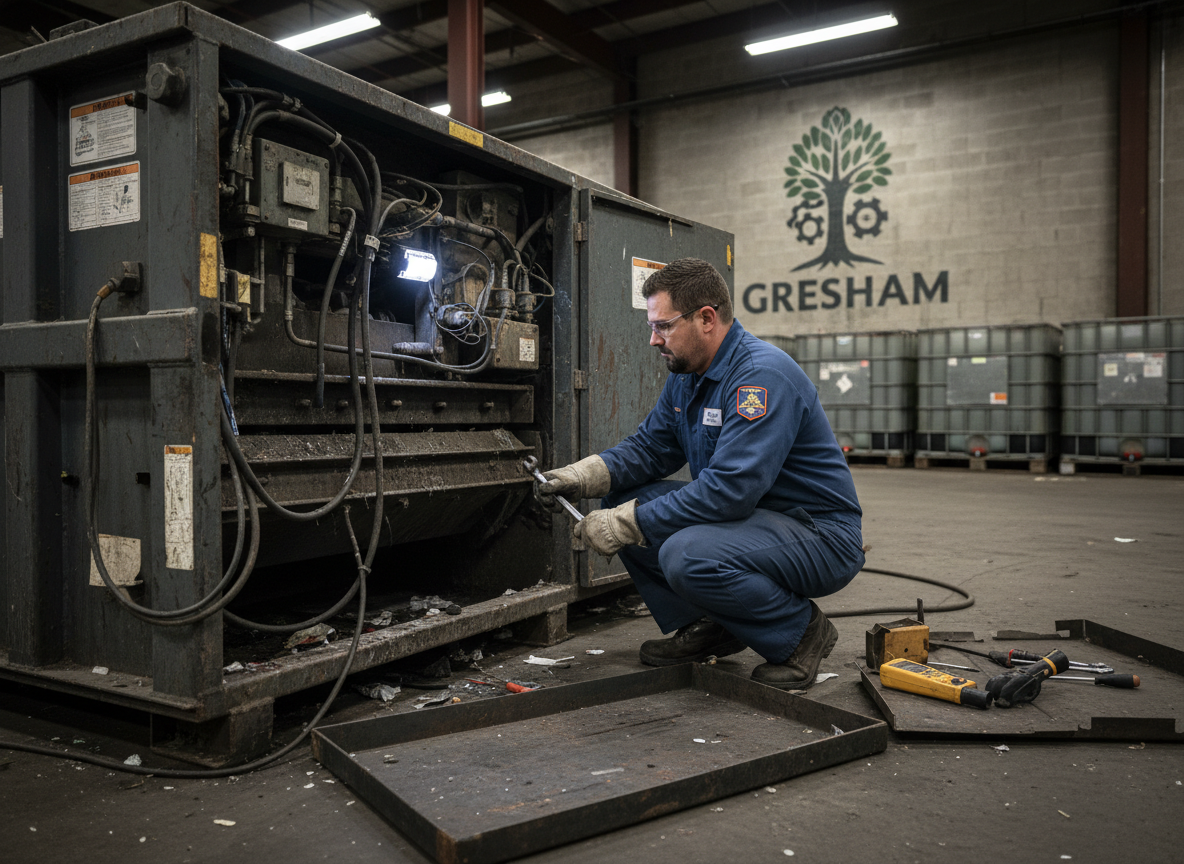
Trash compactors in Gresham homes often face extra strain from the area's wet winters and occasional flooding, especially in neighborhoods like Rockwood where older single-family houses sit on flatter ground near drainage channels. Moisture seeps into door gaskets and rams, corroding the drive mechanisms and causing the unit to jam or fail to compact evenly. Technicians here routinely replace swollen seals and check for water intrusion in the electrical harness before it shorts the motor, a common failure after prolonged rain.
Mild summers do not offset the winter damage, and many compactors installed in homes built before the 1990s around Downtown Gresham use older hydraulic systems that leak fluid when exposed to the damp conditions typical of Multnomah County. Homeowners sometimes attempt DIY resets that mask underlying alignment issues caused by minor foundation shifts from saturated soil. Proper diagnosis requires checking ram travel against the manufacturer's specs rather than simply clearing a jam.
Service calls frequently involve units near Mt. Hood Community College where student housing and older rentals have compactors tucked into tight utility rooms with poor ventilation. Condensation builds inside the cabinet during temperature swings, accelerating rust on the compaction plate. Technicians carry specific replacement rams and control boards for the most common brands found in Portland-adjacent homes to complete repairs without multiple trips across the county.
Technician insight
In Gresham, the thing that catches most people out with trash compactor repair is how wet winters let water reach the lower motor housing in Rockwood homes built on older slabs. Homeowners reset the unit a few times and assume the jam is fixed, but the real issue is corrosion that only shows up after the next heavy rain.
Rockwood Flood-Related Jam
A homeowner in Rockwood called after their compactor stopped mid-cycle following several days of rain. Inspection showed water had entered the lower compartment and corroded the drive coupling. We replaced the seal and motor mount, realigned the ram, and tested the unit through multiple cycles to confirm it compacted without binding.
How it works
- 1
Initial Assessment
Technician arrives at the Gresham address and inspects the compactor for water damage, jammed ram, and electrical faults while noting any signs of prior flooding common in Rockwood.
- 2
Component Testing
Motor, seals, and hydraulic lines are tested for corrosion and alignment issues caused by wet winters before any parts are ordered.
- 3
Repair Execution
Worn gaskets, rams, or control boards are replaced on site using parts suited to older Multnomah County housing stock.
- 4
Final Verification
Full compaction cycle is run and the unit is checked for leaks to confirm it handles typical Gresham household loads without recurring issues.
Pricing
Upfront quotes provided after inspection; cost depends on parts needed and whether flooding has affected the motor or controls.