Gresham homes in Rockwood and near the Gresham Pioneer Cemetery often date back decades with galvanized supply lines and standpipes that trap sediment during wet winters. When occasional flooding reaches laundry rooms on lower levels, that sediment works into drain pumps and inlet valves on top-load and front-load machines alike. Technicians see failed bearings and rusted tubs more often here than in newer Portland subdivisions because the mild summers do little to dry out damp crawl spaces where many washers sit.
Mt. Hood Community College area properties frequently have stacked laundry closets with limited access, forcing repairs that require pulling units away from walls and checking vent ducts for lint buildup accelerated by constant humidity. Water hardness from Multnomah County sources also leaves scale on heating elements in models with internal water heaters, shortening life on high-efficiency units. A single clogged coin trap after a heavy rain can mimic a motor failure, so diagnosis always starts with flow tests rather than part swaps.
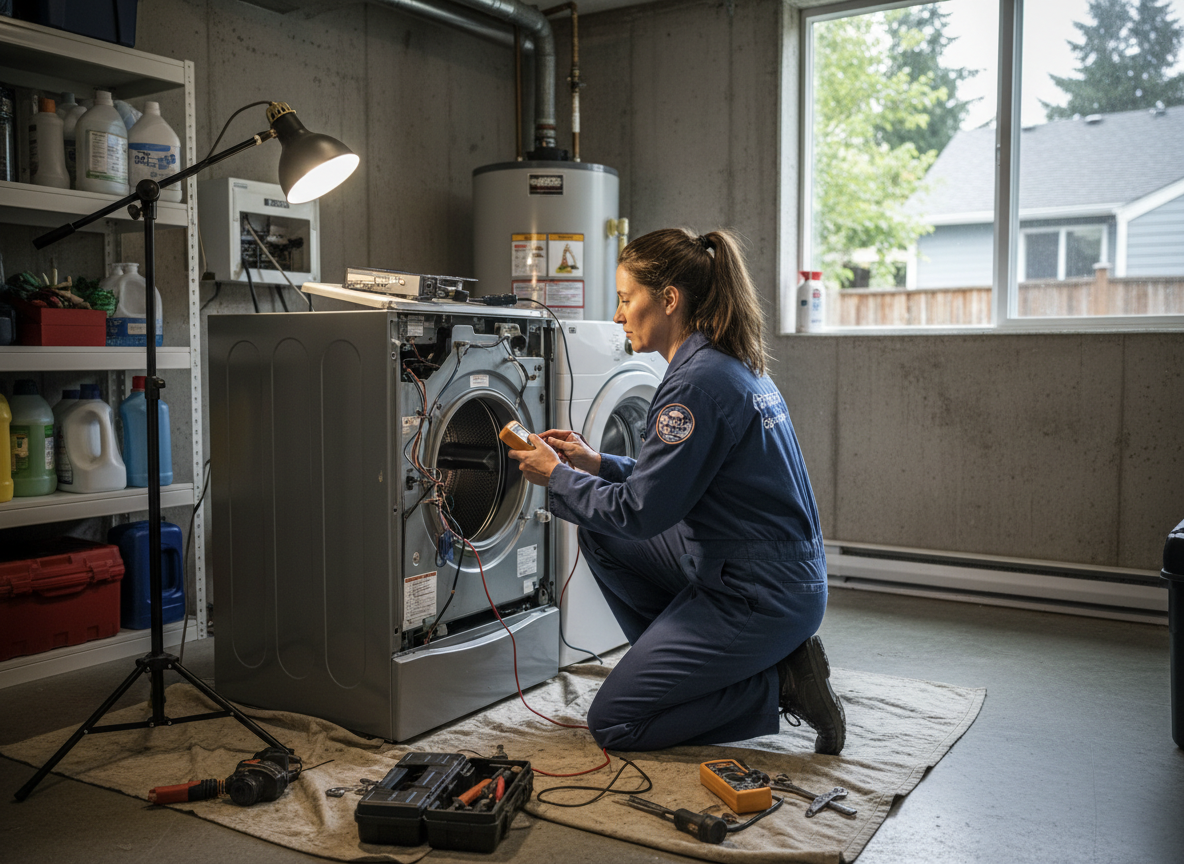
Homeowners in Downtown Gresham call after noticing slow spins or error codes following basement seepage. The combination of older electrical panels and moisture creates intermittent ground faults that trip safety switches mid-cycle. Checking the outlet with a multimeter before opening the machine prevents unnecessary disassembly. GearHavenFix keeps common drain pumps and inlet valves on the truck because same-day access from 18238 SE Division St matters when a family has no working washer during a stretch of wet weather.
Technician insight
In Gresham, the thing that catches most people out with washer repair is how wet winters send silt from Rockwood yards into basement laundry rooms, corroding pump impellers on machines installed decades ago near older foundations that never fully dry out.
Drain Pump Failure After Heavy Rains in Rockwood
A Rockwood homeowner reported their washer not draining following several days of rain. Inspection showed sediment from local flooding had jammed the pump impeller. Replaced the pump, flushed the drain line, and verified no further leaks. The machine completed cycles normally afterward.
How it works
- 1
Initial Assessment
Arrive on site, verify power and water supply, and run a diagnostic cycle to identify error codes or leaks.
- 2
Component Inspection
Remove access panels, test the drain pump, inlet valves, and drive system for wear from local water conditions.
- 3
Repair Execution
Replace faulty parts with compatible components suited to Gresham homes, then retest for proper drainage and spin.
- 4
Final Verification
Confirm no leaks remain, check connections against older plumbing in the area, and demonstrate operation to the homeowner.
Pricing
Upfront quotes based on parts needed and access challenges in older Gresham homes; no hidden fees.